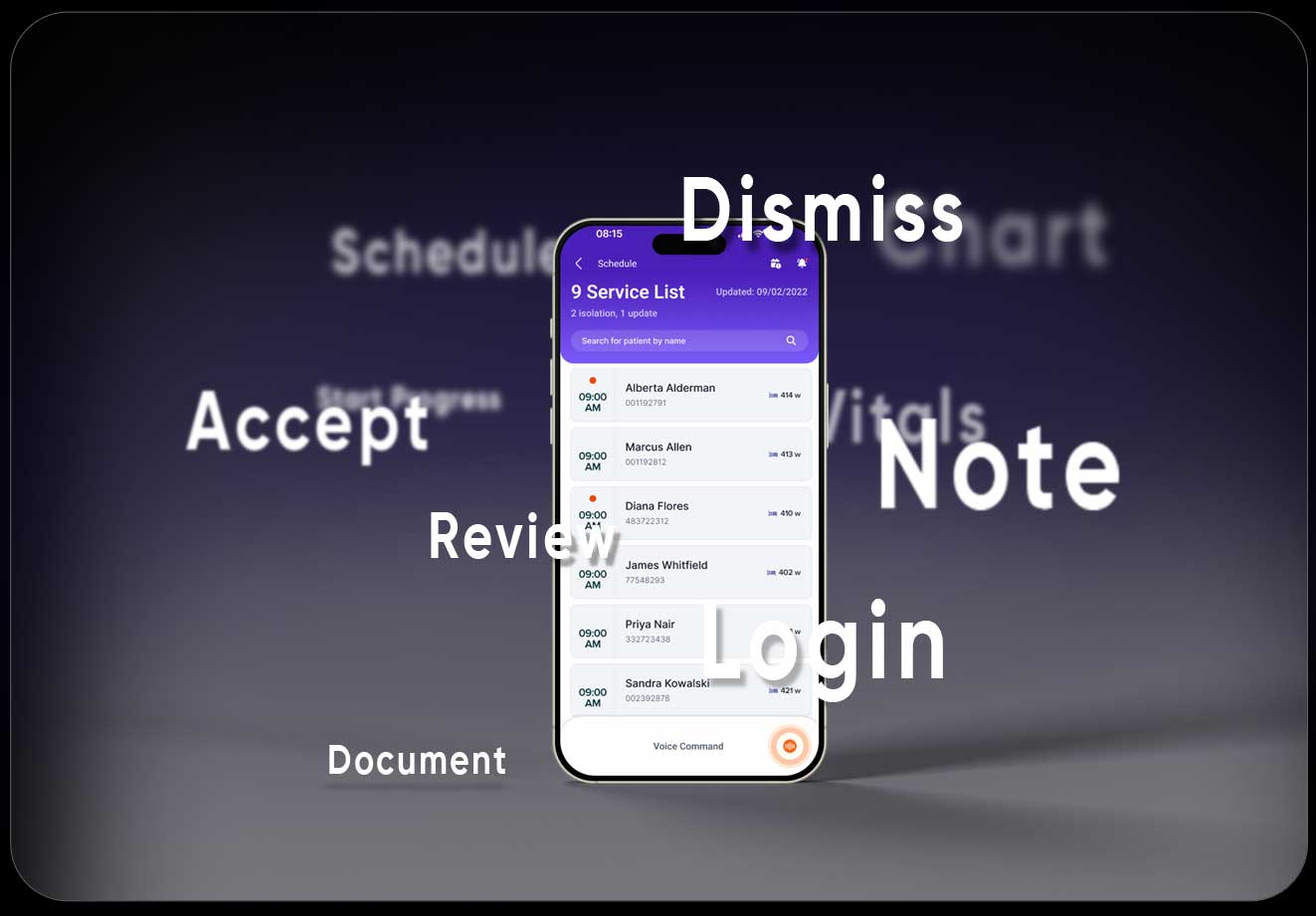
Designing to be heard
Accunurse Journey from paper to automation
Shaping The
Future of Record Keeping
Time should be spent on care not recording the care
87%
Less time Documenting
$500M
In 1 Year
51
Care Facilities
MY ROLE
Sr. Product Designer
SCOPE
Research, IA, UI/UX, Handoff
PLATFORM
IOS then Android
TIMELINE
6 months (Concept to Ship)
Core Problems
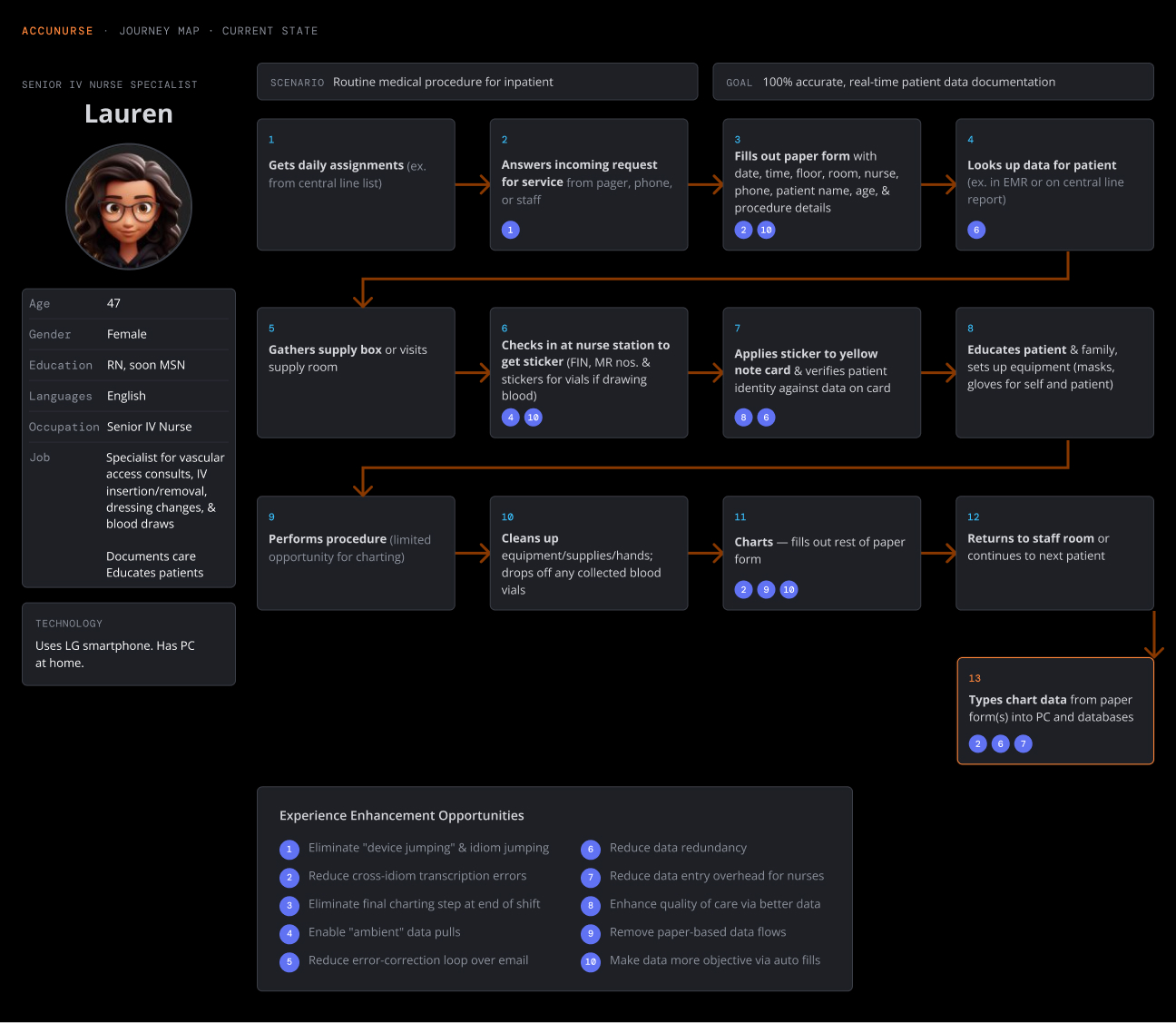
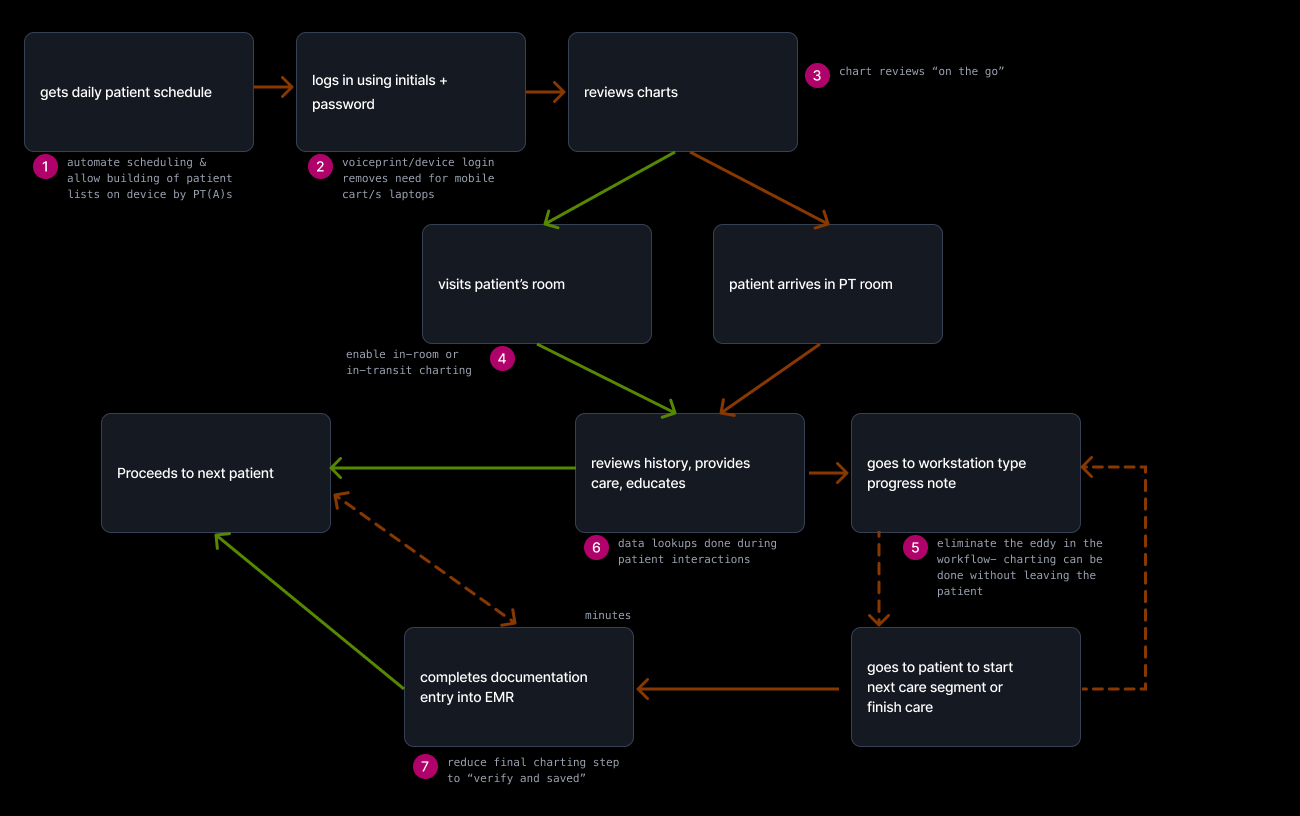
Double documentation and physical movement between:
Patient room Nurse station Staff room PC database
This created:
Redundant transcription Latency in data Error opportunity Reduced patient-facing time
Measures of Success
100% accurate, real-time documentation Eliminate device jumping Reduce transcription errors Remove final end-of-shift charting Reduce data redundancy Reduce data entry overhead Enhance quality of care Remove paper-based data flows Auto-fill objective data
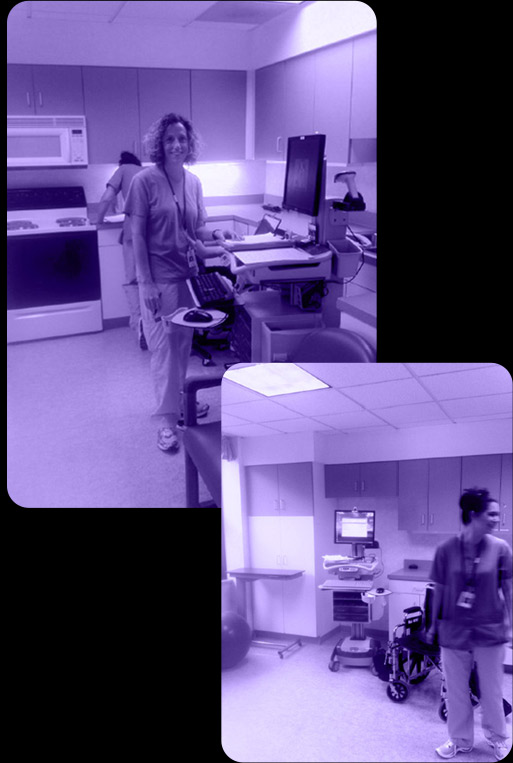
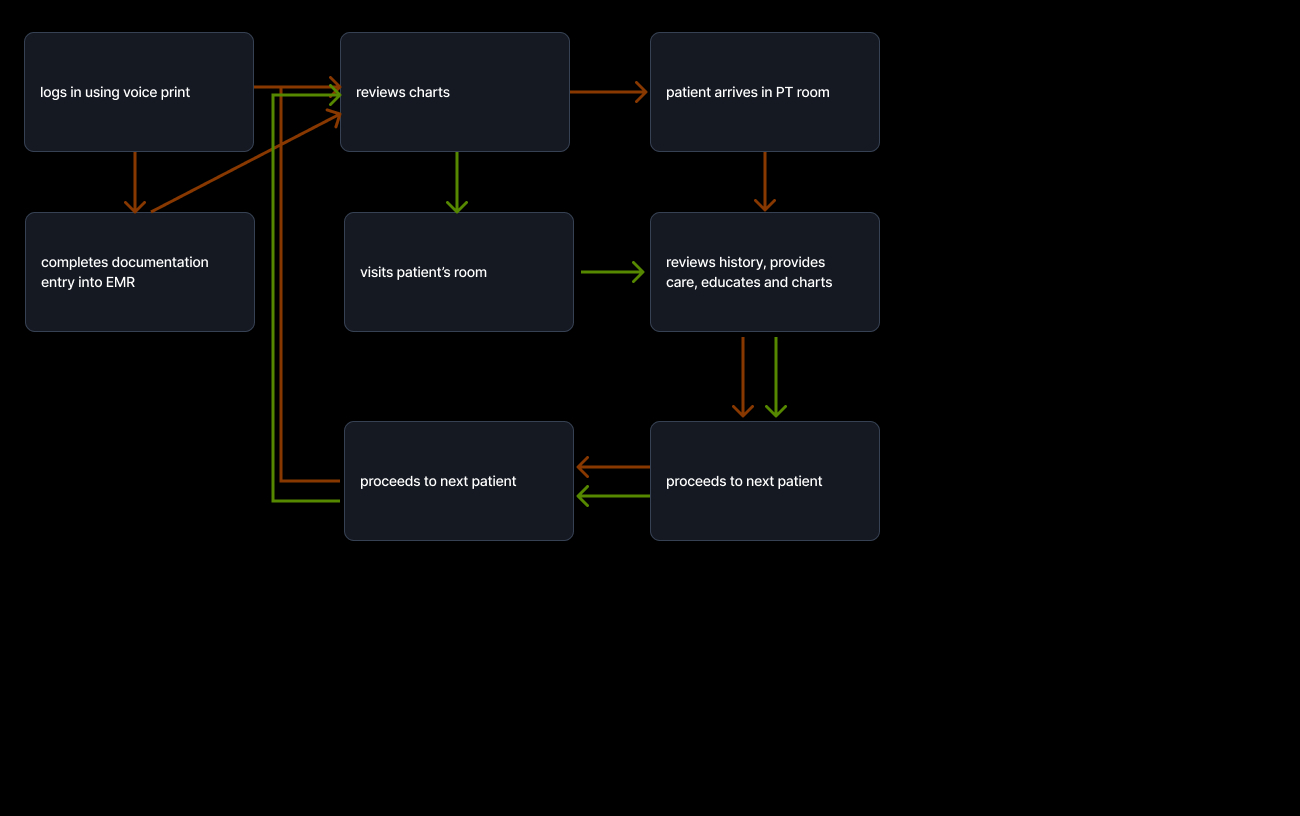
AccuNurse / Experience Research · TCF Workflow
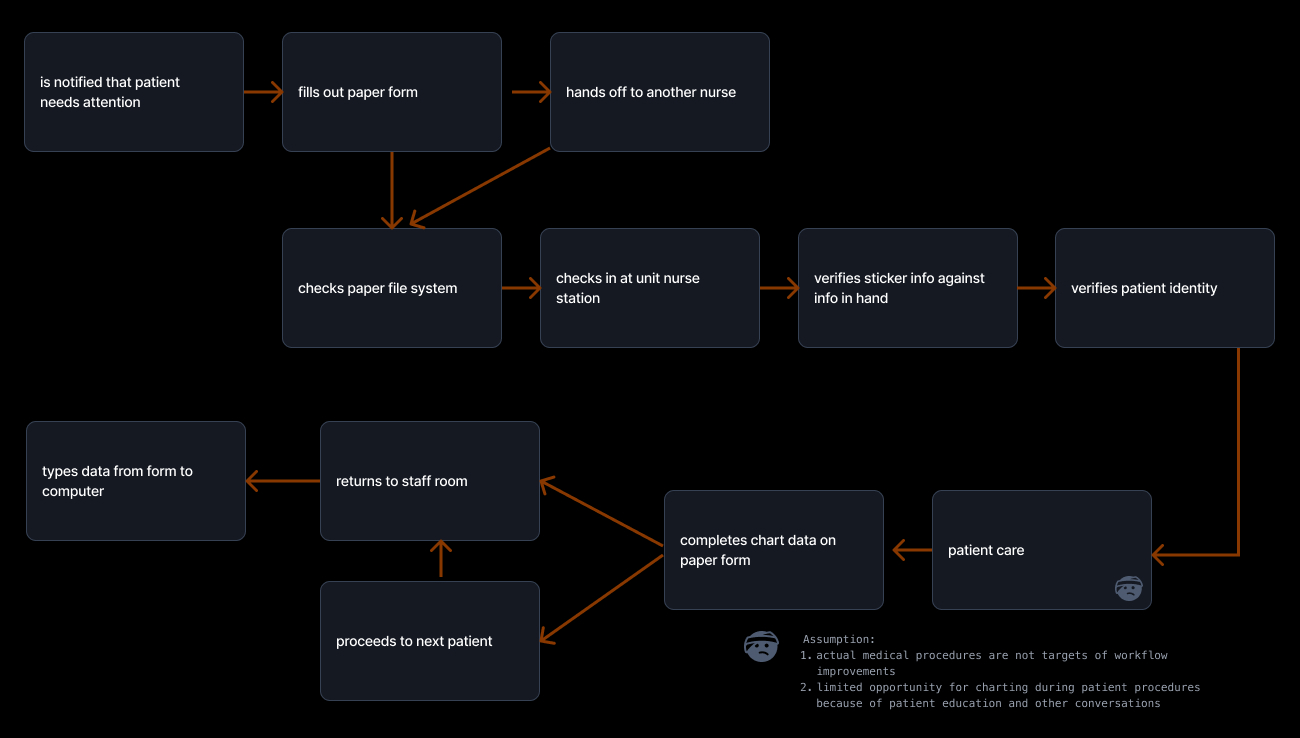
therapy room workflow
isolation patient workflow
opportunities
therapy room workflow
isolation patient workflow
time spent
therapy room workflow
isolation patient workflow
Core Problems
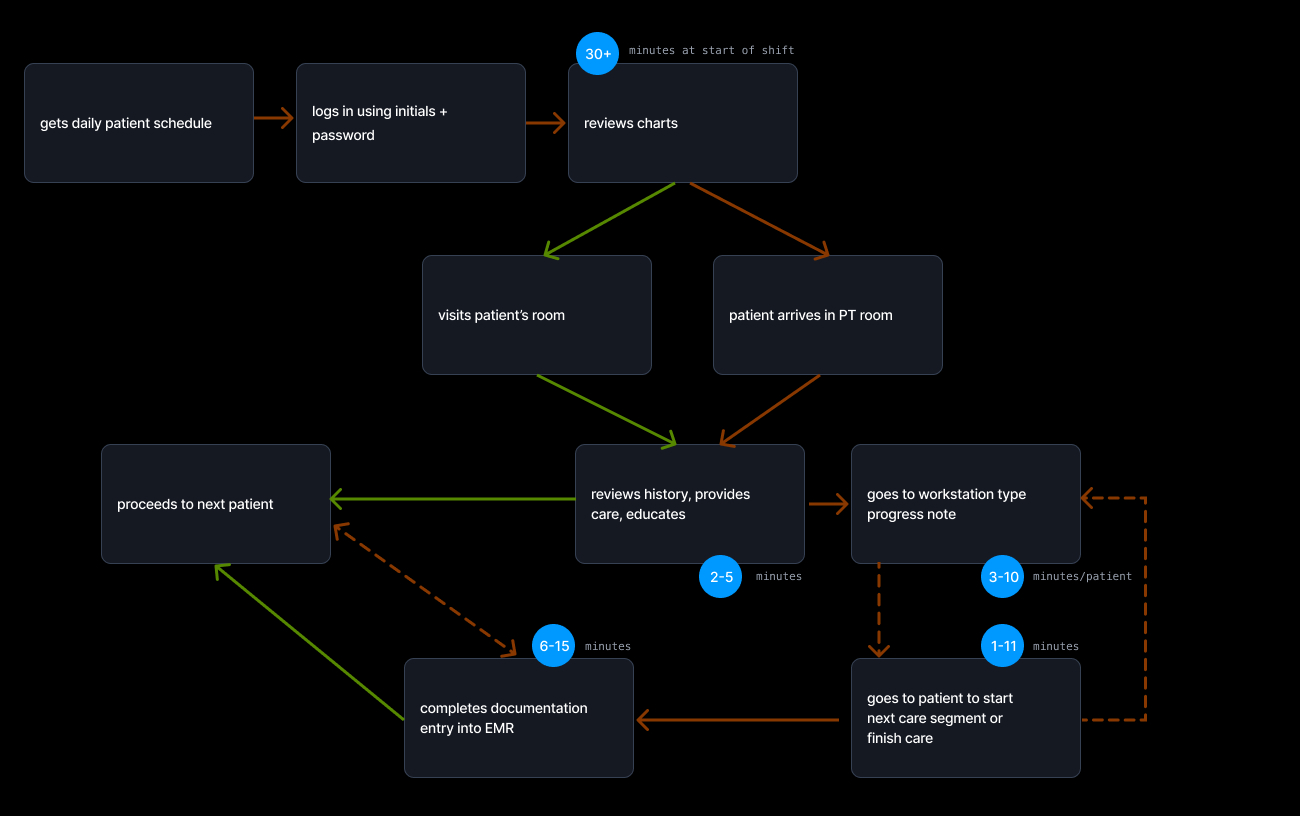
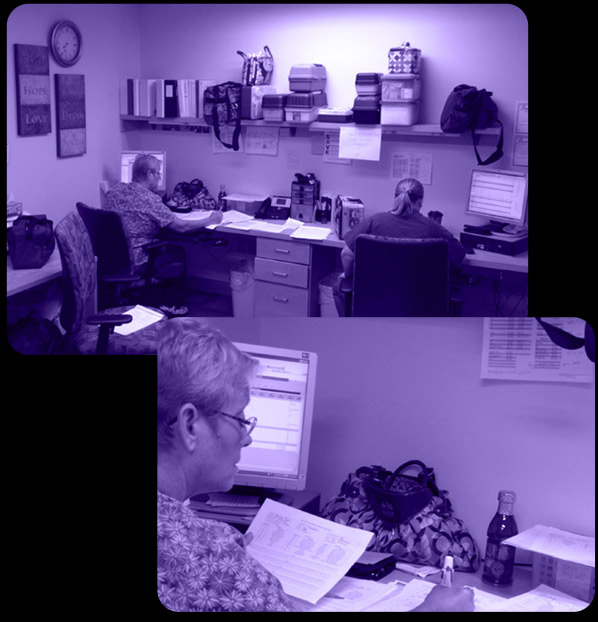
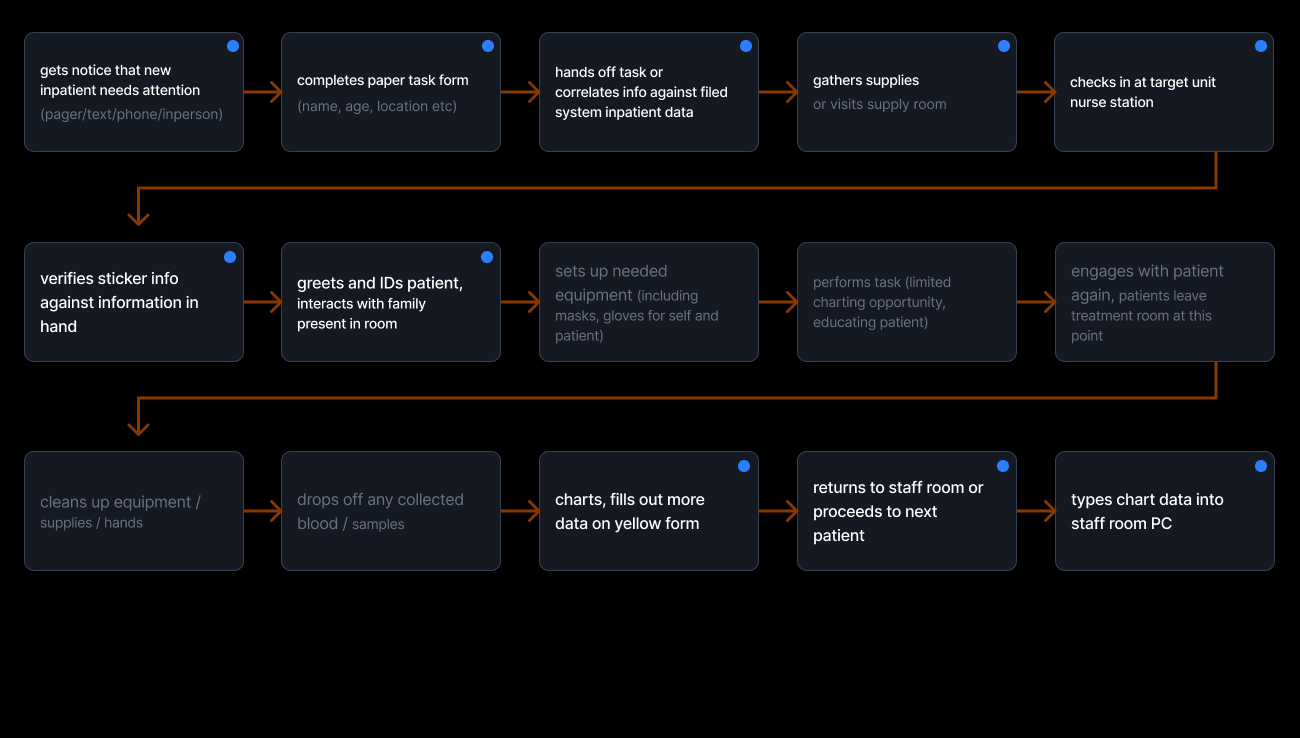
Documentation was fragmented:
Start with paper or memory Go to workstation Return to patient Finish documentation later
This introduced:
Time loss Cognitive load Transcription risk Workflow interruption
Measures of Success
Increase therapy minutes (RUG metrics) Decrease staffing needs Validation of mandatory fields Faster documentation at point of care Accuracy of documentation Proper integration with billing system
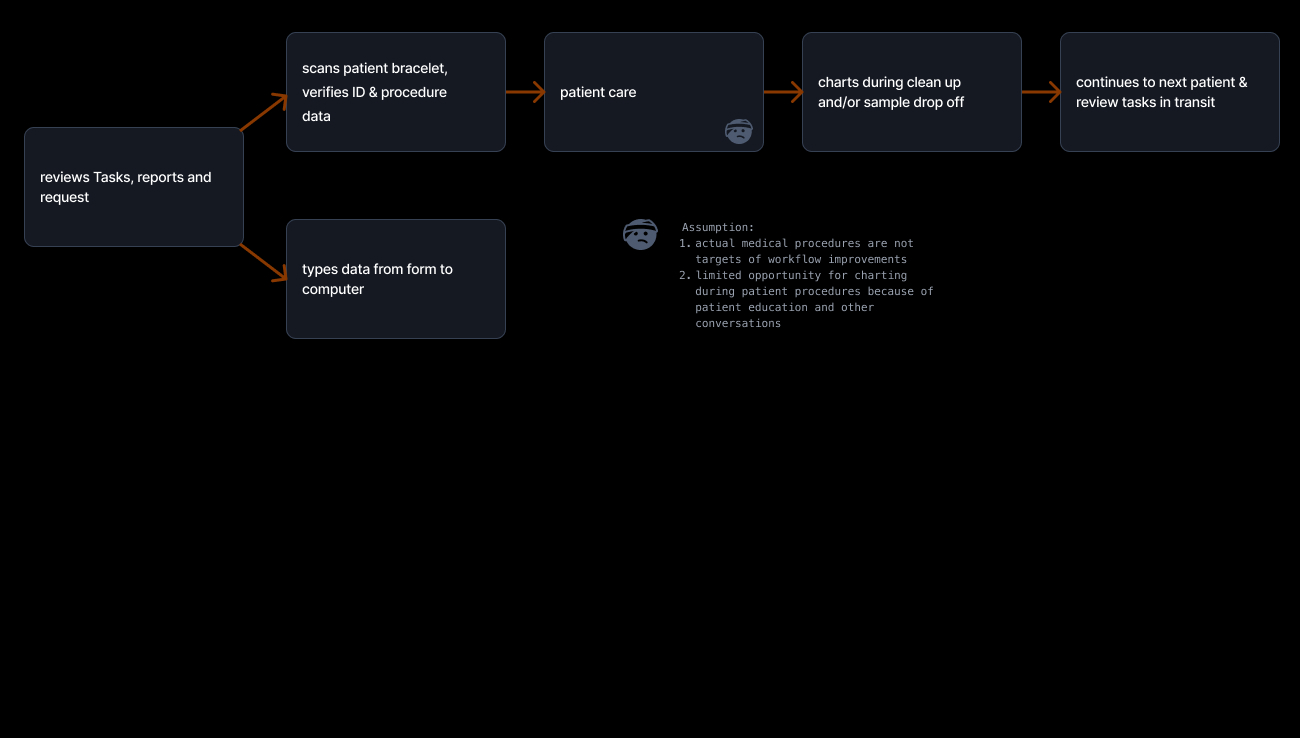
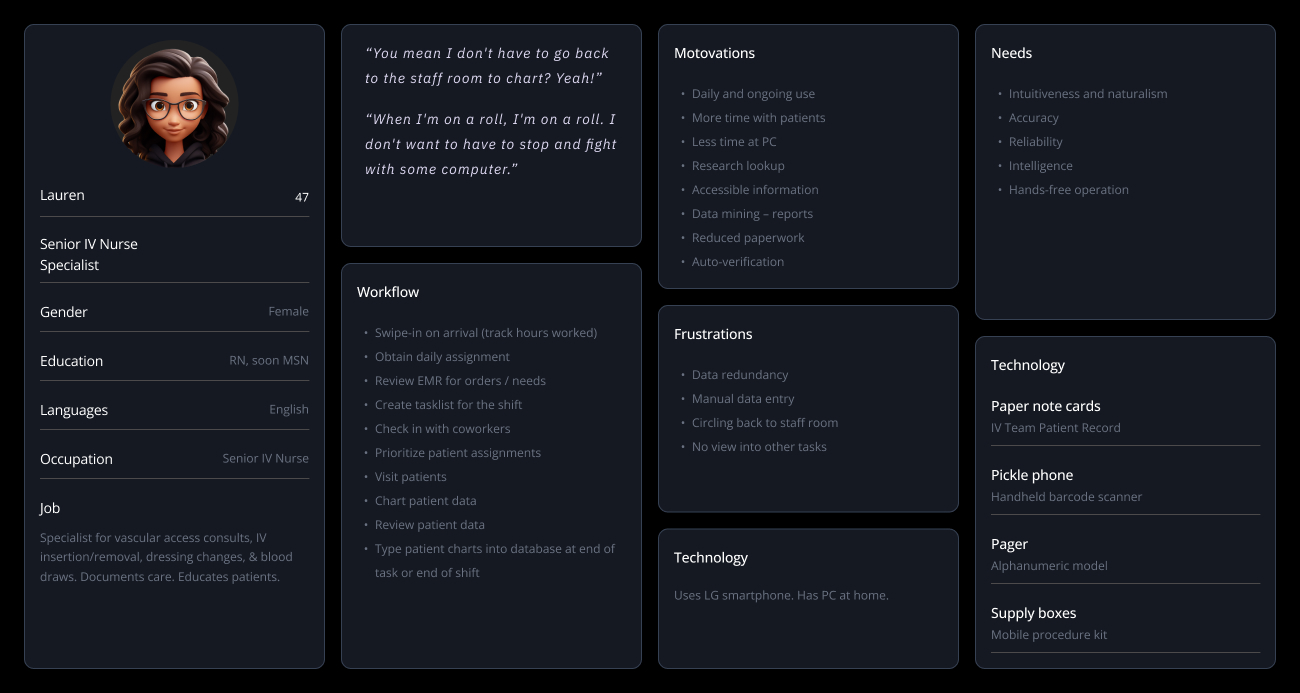
AccuNurse / Experience Research · IV Taskflow
IV Taskflow: opportunities
Flow Direction
Design Opportunity
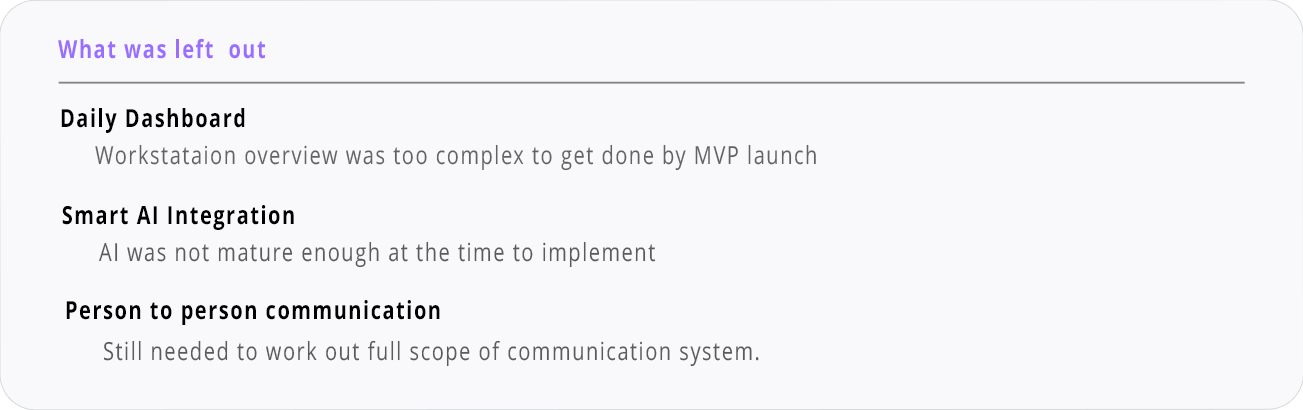
Somethings Gotta Stay Behind
We felt that the tough decision to leave a few things behind wouldn’t impact getting the product in users hands, fulfilling the contract, and start to get feedback.
Before and after
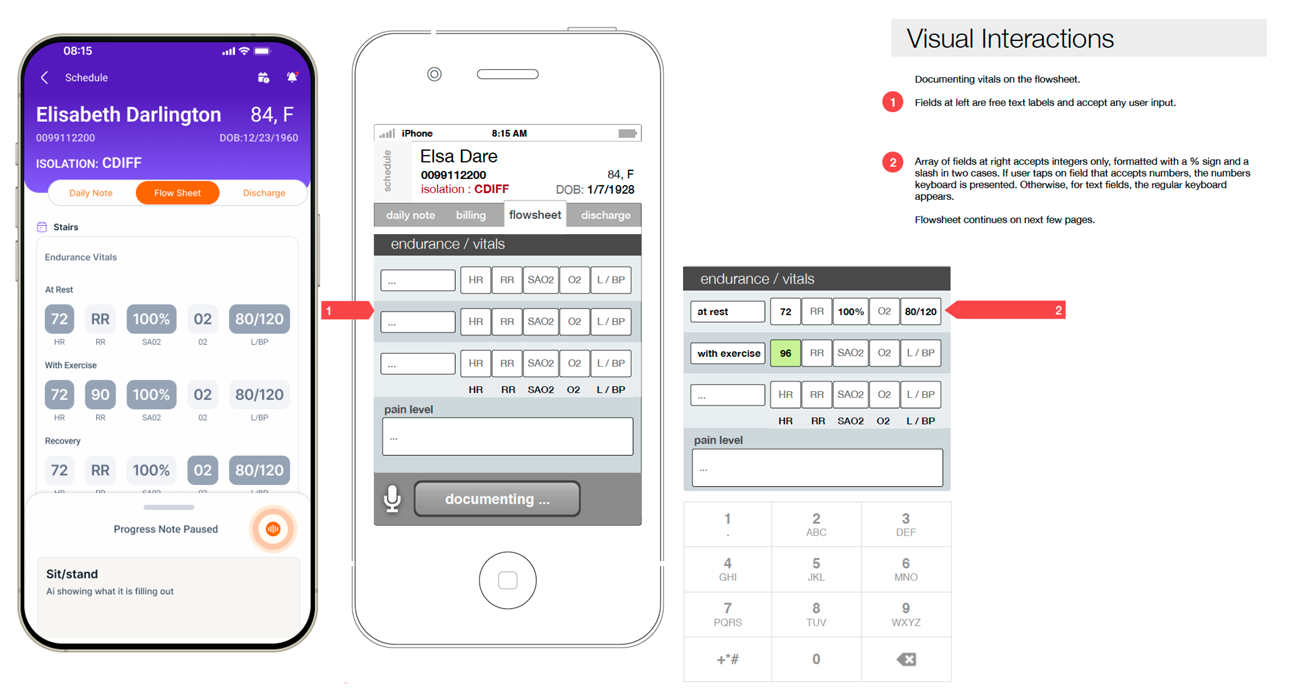
There were numerous wireframes (almost 100) outlining functionality. I am only showing two. but you will get the point. The CTO wanted everything wired out for the dev team. Today there are better ways to be more efficient.
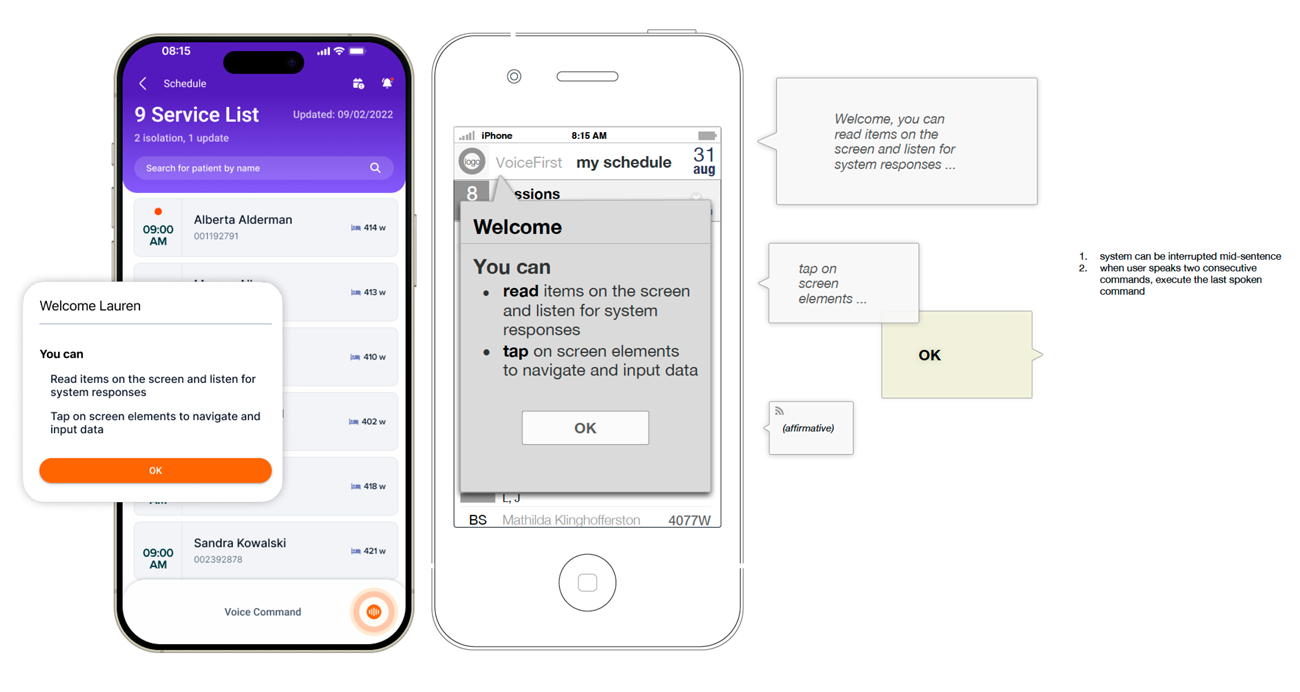
There were coaching screens that popped up when the system knew a user was using a certain part of the app for the first time.
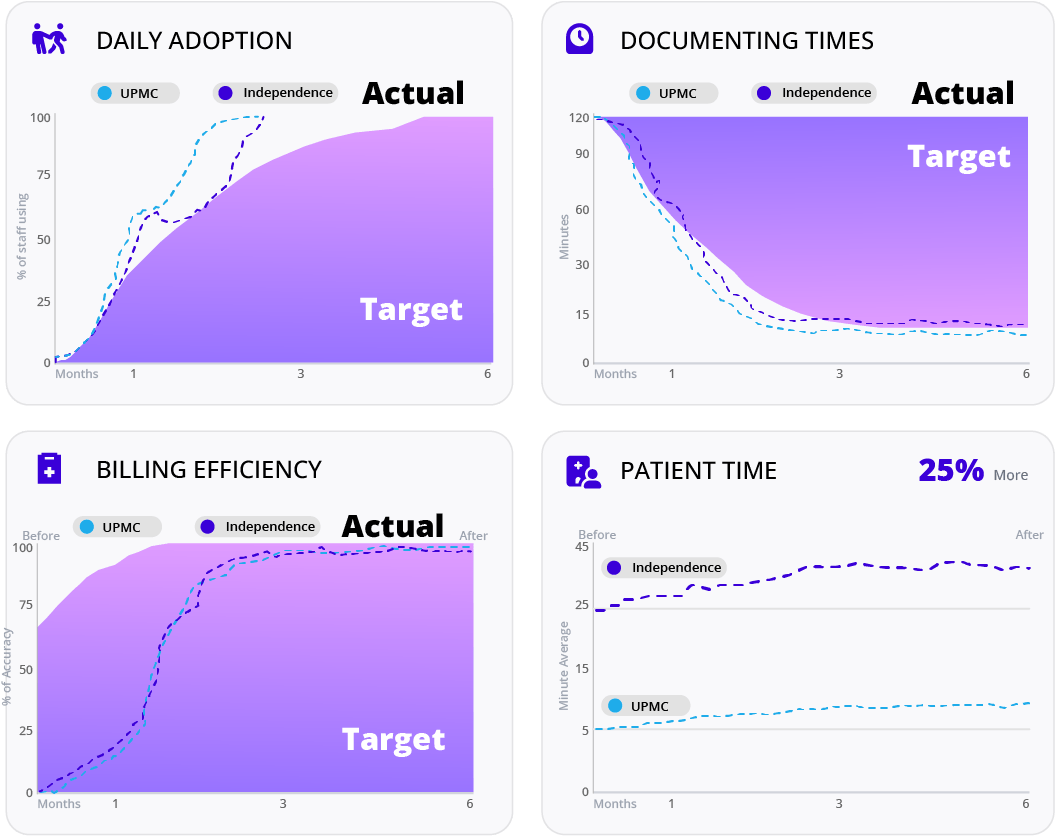
UX - Business Impact
Measurements were taken Post launch 1- 4 months
Every product operates within its own set of constraints, timelines, technology, business goals, functional requirements, and the realities of the environment it lives in. Good design happens within those guardrails. The role of a designer is to bring experience, the right tools, and a clear understanding of what’s being built and who it’s for.
Each case study shown here is only a snapshot of a much larger process. I tend to ask a lot of questions because understanding the people using a product, and the context they use it in, reveals insights that assumptions alone never will.
Thanks for taking the time to explore this project. If it resonates with you, I’d be glad to talk more about it.